
Everyday injuries, taken seriously
Most orthopaedic trauma is not a major pelvic injury. It is a wrist broken in a fall, an ankle that gave way on a step, a foot crushed under something heavy. These injuries are common, and that is exactly why they deserve careful treatment: a fracture that is dismissed as minor but heals badly can affect a hand, a foot or an ankle for years.
Dr Hoskins treats acute fractures across the body, publicly at Whangārei Hospital and privately. This page covers the five he is asked about most. Injuries to the pelvis and hip socket have their own page, and fractures that have failed to heal or healed badly are covered under complex fracture problems.
The five common fractures
Ankle
Ankle fractures range from a single stable break in the fibula to injuries involving both sides of the joint and the ligaments between them. Because the ankle carries the whole body weight over a small surface, whether the joint sits perfectly is central to the assessment.
Wrist
The wrist, most often the distal radius, is one of the most commonly broken bones at every age, typically from a fall onto the outstretched hand. Assessment weighs the position of the fragments, whether the joint surface is involved, and what the wrist needs to do for that person.
Forearm
The radius and ulna work as a pair, rotating around each other every time the palm turns. Fractures of the forearm shaft can disturb that relationship, which is why their alignment is held to a stricter standard than many other bones.
Foot
Foot fractures include the metatarsals, the toes, and less commonly the midfoot and heel. Many are stable and treat well without surgery; a smaller group, particularly those disturbing the alignment of the midfoot, need careful assessment because they are easy to underestimate.
Elbow
Elbow fractures involve the lower humerus, the olecranon or the radial head, often after a fall. The elbow is unforgiving of stiffness, so the assessment balances holding the fracture still enough to unite against moving the joint early enough to keep it supple.
How treatment is decided
Many fractures do not need an operation. A stable, well aligned fracture in a cast, boot or splint is often the right treatment, and recommending against surgery is as much a part of fracture care as operating.
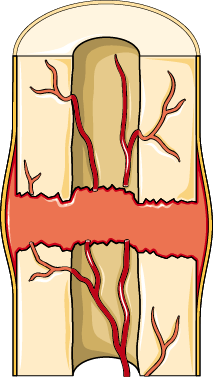
How a fracture heals
A fracture heals by laying down new tissue between the bone ends, which is replaced by bone and slowly remodelled. Treatment, whether a cast or an operation, exists to protect that process: holding the fragments still enough, and close enough to where they belong, for it to run.
Surgery is recommended when the position, stability or joint involvement of the fracture means it is unlikely to do well without it. That usually means realigning the fragments and holding them with plates, screws, wires or a rod inside the bone. The decision weighs which bone is broken, how far it has displaced, whether the joint surface is involved, the state of the skin and soft tissues, and what that limb needs to do for that person.
Dr Hoskins is an active researcher in fracture care, and has discussed ankle fracture treatment, including the question of early versus delayed weight bearing, on the ConveyMD orthopaedic podcast.
Being seen after an injury
If you think you have broken a bone, get the injury assessed and X-rayed first: an urgent care clinic, your GP, or the emergency department for anything severe. If it is an emergency, call 111. Once there is an X-ray, a GP, physiotherapist, urgent care clinic or emergency department can refer directly, and most accidental injuries in New Zealand are covered by ACC.
The trauma overview explains the pathway in more detail, including what to do while you are waiting to be seen.