

What Dr Hoskins treats in the hip
The hip work of the practice covers osteoarthritis and other causes of hip pain, primary hip replacement, revision surgery for a hip replacement that is no longer working well, and fractures of the hip and the socket it sits in.
Hip replacement is a large part of Dr Hoskins’ published research. He has studied surgical approach and its effect on revision rates, femoral head size, bearing choice, dual mobility and constrained liners, cemented and cementless stem selection, and hip replacement after a femoral neck fracture, much of it using national joint replacement registry data from Australia and New Zealand.
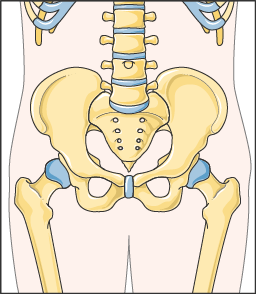
The hip is a ball and socket joint. The ball is the rounded top of the thigh bone, and the socket, the acetabulum, is part of the pelvis. Where the two meet, both surfaces are covered with cartilage.
Hip arthritis, hip replacement and fractures of the hip socket are all problems of this junction.
How a hip assessment works
An appointment begins with your history and an examination, together with any imaging you already have. Hip pain is not always coming from the hip joint itself, so part of the assessment is establishing where the problem actually is before discussing what to do about it.
If the hip is the source, the conversation covers what stage the arthritis is at, what non-surgical measures are still worth trying, and whether replacement is something to consider now or later.
What is tried before surgery
Many hip problems are managed well without an operation. Where it is appropriate, non-surgical care may include:
- Activity modification and pacing
- Weight management
- Physiotherapy and targeted strengthening
- Pain relief and anti-inflammatory medication where appropriate
- Walking aids where they help
- Joint injections in selected cases
Surgery is considered when pain is interfering with your quality of life and is no longer adequately controlled by other measures, not simply because a scan shows wear.
If an operation is recommended, you are given the benefits, the risks and the likely recovery, with time to decide. There is no obligation to decide on the day.
The hip operations offered here
The hip side of the practice is joint replacement and fracture surgery. In outline, that covers:
- Assessment and non-surgical management of hip osteoarthritis
- Total hip replacement
- Complex primary hip replacement, where previous surgery, deformity or bone loss make a first replacement harder than usual
- Revision hip replacement, including for loosening, wear, instability or infection
- Hip replacement carried out because of a fracture of the femoral neck
- Fractures of the hip and the pelvis, including fractures around an existing hip replacement. These are covered under orthopaedic trauma.
How the surgery is planned
- Surgery planned around you Dr Hoskins takes a patient-centred approach to hip surgery. The surgical approach is chosen to suit the individual, their anatomy, diagnosis, activity level and goals, rather than a single fixed technique. This is also an area he has published on directly, using registry data on how approach relates to later revision.
- Patient-specific implant selection Implants and constructs are selected for each patient rather than defaulting to one brand or design, so the choice fits the person’s joint, bone quality and needs.
- Technology-assisted where it adds value Where it adds value, Dr Hoskins uses technology-assisted techniques during joint replacement to support accurate implant positioning and alignment. The approach, implant and any technology used are selected to suit each patient.
Where surgery happens, and how it is paid for
Consulting is in Whangārei. Private surgery is carried out at Allevia Kensington, and Dr Hoskins also operates at Whangārei Hospital.
A hip fracture or other injury is generally covered by ACC, and surgery for it usually needs ACC approval first. Hip arthritis and elective hip replacement are generally not ACC funded, so the routes are the public system, private health insurance, or self-funding. Consultation and surgery fees are given to you when you book, and you receive a written estimate before any operation. See ACC, insurance and fees for the detail.
Do I need a referral?
Yes. Appointments are made by referral from your GP or another health professional, and physiotherapists can refer directly as well. See your appointment for what a first consultation involves, and ACC, insurance and fees for how the funding side works.