
What is hip osteoarthritis?
The hip is a ball-and-socket joint, and both surfaces are lined with articular cartilage. In osteoarthritis that cartilage thins and wears, the joint space narrows, the bone underneath thickens and bony spurs form around the rim. The joint gradually stiffens as well as becoming painful.
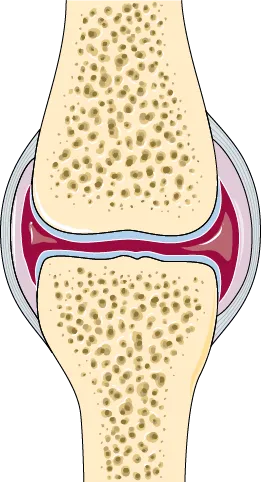
Healthy joint
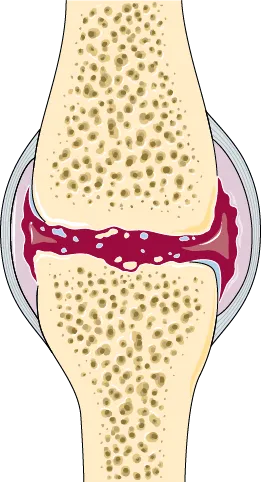
Osteoarthritic joint
It becomes more common with age. It is more likely if you have had a hip injury or fracture, if you had a hip condition as a child such as developmental dysplasia or a slipped epiphysis, if there is a family history, or if the shape of the hip causes impingement.
What are the symptoms?
- Groin pain, often the first and clearest sign. Pain may also be felt in the buttock or referred down to the knee.
- Stiffness, particularly getting going after sitting
- Difficulty putting on shoes and socks, or cutting toenails
- A limp, and reduced walking distance
- Pain at night, in more advanced arthritis
Pain on the outside of the hip is more often a tendon problem (gluteal tendinopathy or trochanteric bursitis) than arthritis, and it is treated differently. Pain from the lower back can also be felt in the hip and buttock. Distinguishing between these is part of the assessment.
How is it assessed?
Assessment starts with your history and an examination, including how far the hip moves and what provokes the pain. A weight-bearing pelvic X-ray is the standard imaging. MRI is not usually needed to diagnose osteoarthritis, but it is useful when the diagnosis is uncertain or another problem such as avascular necrosis is suspected.
As with the knee, the X-ray appearance and how you feel do not always correspond.
Treatment follows your symptoms and how the hip is affecting your life.
What can be done without surgery?
- Exercise and physiotherapy Focused on maintaining movement and strengthening the muscles around the hip and pelvis.
- Weight management Where relevant, to reduce load through the joint.
- Activity modification Keeping active while reducing the activities that consistently aggravate the hip.
- Simple pain relief Discussed with your GP or pharmacist.
- A walking stick Used in the opposite hand, which reduces load through the hip.
- Injections Usually image-guided for the hip. These can settle symptoms for a period and can also help confirm that the pain is coming from the joint itself.
When does hip replacement become a consideration?
Replacement is considered when arthritis is advanced, symptoms are significantly affecting your life, and non-surgical measures are no longer holding them. There is no particular age or X-ray appearance that makes surgery automatic. It is a shared decision.
Being referred does not commit you to an operation. See hip replacement for what surgery involves.